
Hewn from the timber of a wild frontier, she stood and braved the ever-shifting ways; A rugged window to an early year, where her proud legacy forever stays…
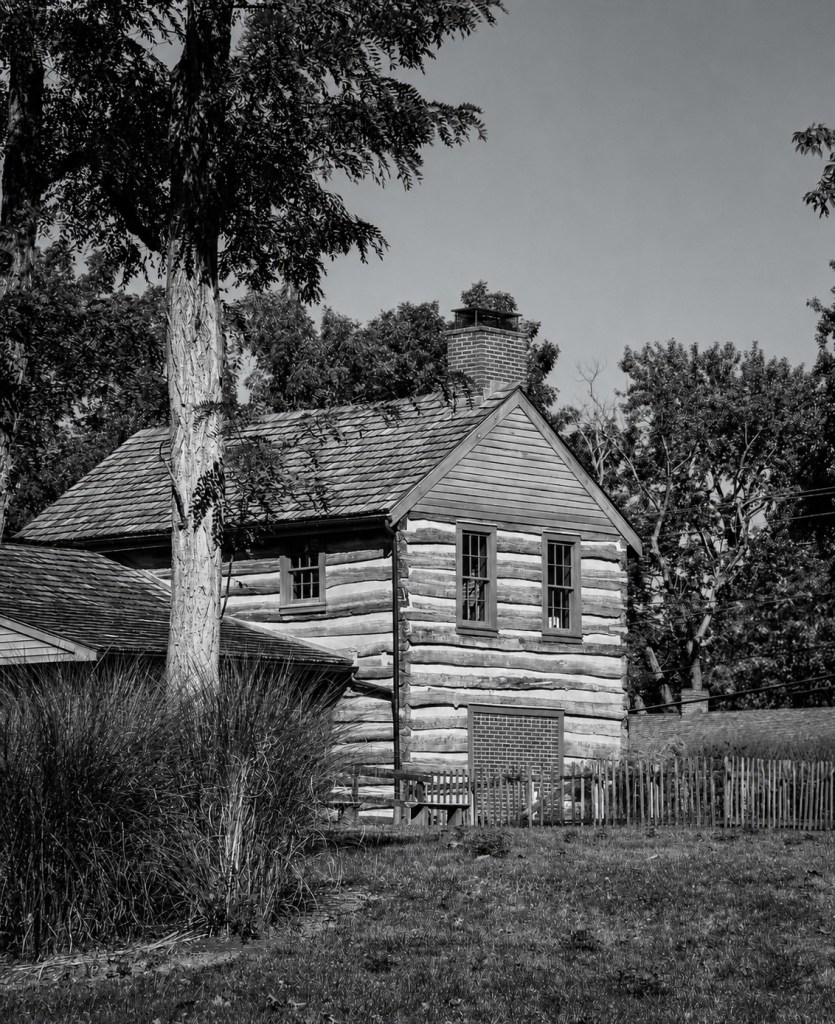
Groveport, Ohio
September 8, 2025
Discovering History
Since I had a little time to burn before my doctor’s appointment—and I had my camera riding shotgun—I figured I’d take the scenic route and see if I could find something worth photographing.
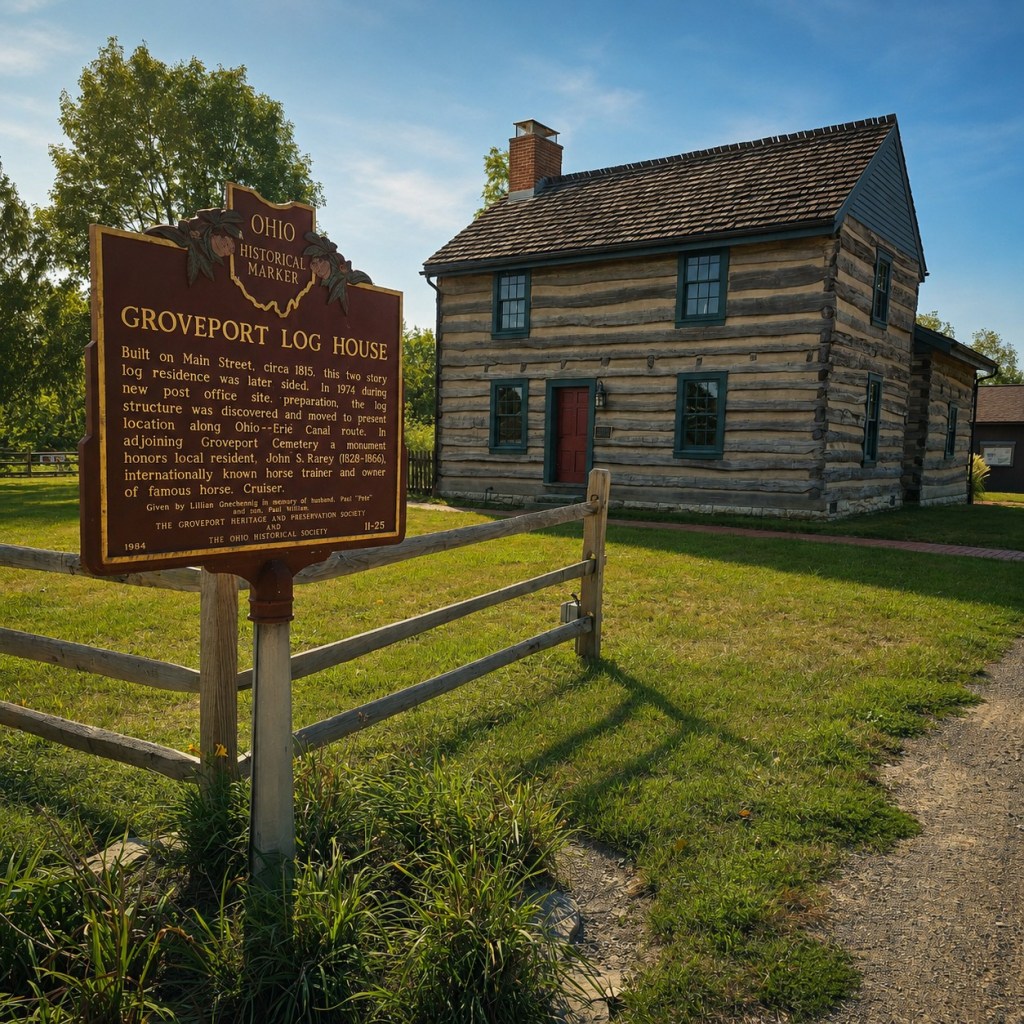
Well, I happened to stumble across this old cabin after spotting one of those Ohio Historical Markers along the road. You know the ones… those signs that 99% of people zoom past without a second thought. Most folks probably assume they say something like, “Warning: Corn Ahead!” 🌽 I mean, it is Ohio after all… Lol!
Not me!
As a certified history geek, seeing one of those signs usually causes an immediate case of “historical brake syndrome.” My poor Jeep probably thinks, “Oh great… here we go again. He’s about to slam on the brakes because somebody important sneezed here in 1824!” 🤣
Well, since I enjoy telling stories more than reciting names and dates, let me share the story behind this old cabin. While the tale is technically fictional—since very little is known about Samuel Butterfield’s personal life—it does paint an accurate picture of what life was like on the Ohio frontier around 1815, when this cabin was built by Mr Butterfield.
A Short Tale of Ohio’s Unforgiving Frontier
The autumn of 1815 found the ring of Samuel Butterfield’s felling axe echoing through the ancient, towering timber of Madison Township, a solitary rhythm against the vast silence of the Ohio wilderness. Raw and ruggedly young, Ohio was barely twelve years into its infancy. Here, a man stood on the jagged, bleeding edge of the American frontier.
Samuel wiped the stinging sweat from his eyes, his muscles aching from months of unrelenting labor. Around his boots lay the massive, fallen trunks of old-growth oak and walnut. To the east, the civilized world was finally breathing a sigh of relief. While the British fleet had been famously defeated on Lake Erie two years prior, and the threat of invasion had steadily waned, it wasn’t until this year that true, lasting stability arrived.
The Treaty of Ghent, signed across the ocean in December and officially ratified in the States in early 1815, had finally closed the book on the War of 1812. The intense frontier fighting that had kept the local blockhouses locked and loaded was officially a thing of the past. For the first time since he had arrived, a man could raise a permanent home without looking over his shoulder for a raiding party.
But peace didn’t clear the land. Samuel’s hands were a map of deep blisters and half-healed cuts, a testament to the daily war against the wilds.
Beside him, his neighbor, a grizzled veteran who had marched through the mud of Fort Meigs, helped guide a heavy, hand-hewn white oak log toward the foundation, using a team of straining oxen hooked to a rugged timber sled.
“The ague’s got the Miller’s family down by the creek again, Samuel,” the older man grunted, leaning against a log. “They’re shaking so hard the cabin walls are rattling. We’re short three men to help.”
Samuel frowned. The ague, the dreaded frontier malaria, was a constant thief. The low-lying creek bottoms and thick, undrained wooded basins of central Ohio bred clouds of mosquitoes that brought families to their knees with burning fevers. If the fever didn’t get you, the isolation would.
There were no doctors out here, no stores, and no stable currency. Just last week, a traveling land speculator had tried to pass off worthless paper bank notes from a failed wildcat bank in Cincinnati. Out here on the frontier, the only real currency was muscle, salt, and whiskey.
Suddenly, the oxen bellowed, their eyes rolling back in terror. The team violently jerked against their heavy wooden yokes, twisting the iron chains.
From the thick brush at the edge of the clearing, a low, guttural snarl vibrated through the crisp autumn air.
Samuel froze. His rifle was propped thirty yards away against a half-notched log.
A massive timber wolf, its grey coat scarred and bristling, stepped into the light. Behind it, two more slid through the shadows like smoke. The frontier wildlife was an occasional predator; just two nights ago, a cougar had snatched a neighbor’s goat straight out of its pen. With the winter approaching, the pack was hungry, bold, and entirely undeterred by man.
The lead wolf lunged, snapping its jaws inches from the throat of the lead ox. The terrified beast thrashed, threatening to overturn the sled and crush Samuel’s leg beneath the rolling log.
“Get the team back!” Samuel yelled.
Instead of running for his gun, Samuel grabbed his felling axe. Adrenaline surging, he swung the heavy tool in a wide, vicious arc, catching a heavy branch of a fallen sycamore and slamming it into the dirt. The loud CRACK of shattered wood startled the lead wolf. It hesitated, baring yellow fangs.
With a fierce, guttural shout, Samuel stepped forward, brandishing the gleaming steel blade of his axe. From the other side of the clearing, his neighbor finally reached the flintlock rifle. A sharp CRACK echoed through the woods. The ball tore through the upper branches just above the pack. The smoke, the flash, and Samuel’s fierce stance broke the wolves’ nerve. With low whimpers, the predators melted back into the impenetrable dark of the old-growth forest.
Samuel stood breathing heavily, his heart hammering against his ribs. He looked at his axe, then at the half-raised, two-story log frame. It was a brutal life. It was a place of mud, fever, sudden violence, and exhausting toil.
Yet, as the dust settled and the autumn sun began to sink, casting brilliant, fiery orange streaks across the sky—the lingering atmospheric dust of that massive volcano that had erupted across the world in April—Samuel looked at the sturdy hewn logs of his house.
He didn’t just see a shelter from the wolves. He saw a foundation. Standing on the edge of that dark frontier, Samuel had a sudden, stubborn vision of what this great, young state was destined to become. He knew that beneath the dense timber lay some of the richest soil in the world. He dreamed of a day when these ancient forests would give way to golden fields of corn and soybeans; when the rough-cut pack trails would turn into bustling turnpikes, and great ribboning canals would connect these lonely woods to the markets of the world.
He looked at the sturdy, squared logs he had raised with his own two hands and smiled. The frontier was harsh, but Ohio was the future. And his cabin would stand to see it all.
Time Capsule from a Bygone Era
Samuel Butterfield’s resilient vision materialized into an enduring piece of Ohio history. Originally constructed at the intersection of Main and Madison Streets, this two-story log structure spent over a century masked by modern protective siding until it was rediscovered during post-office site preparations in 1974.
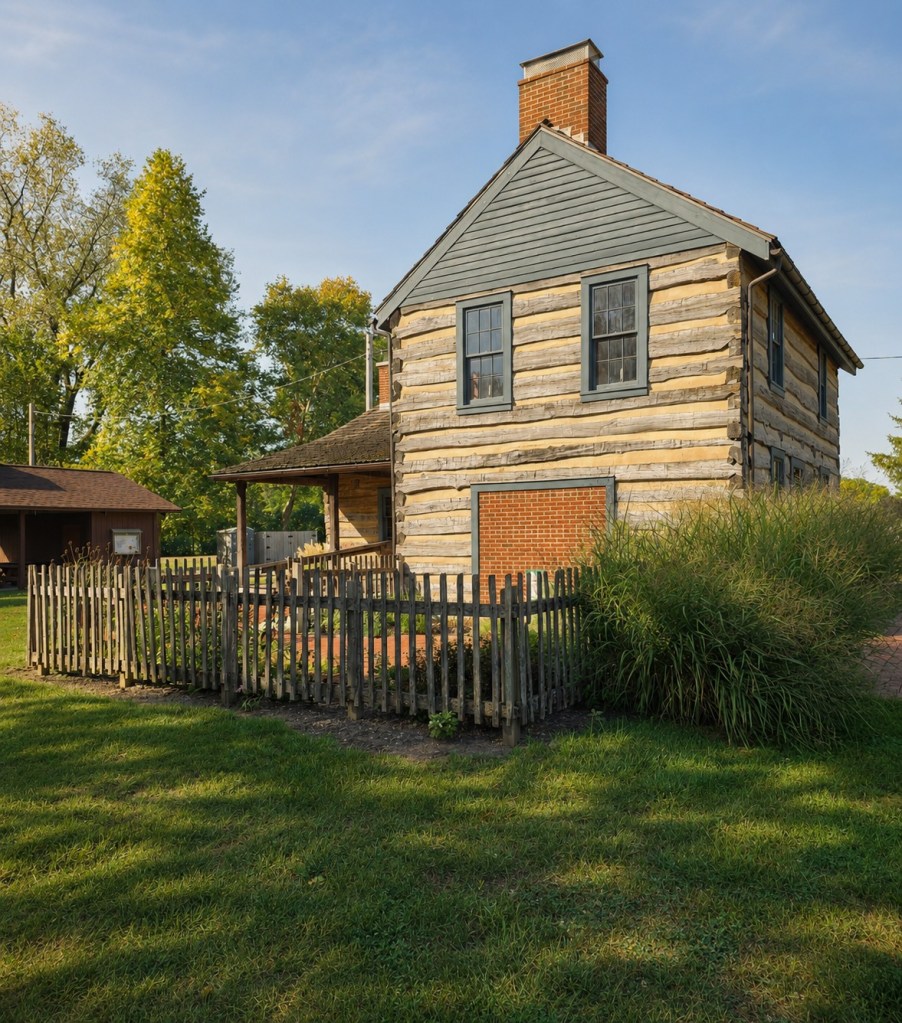
Recognizing its vast frontier value, local preservationists rescued the structure, relocated it alongside its 1825 summer kitchen to the 16.7-acre Heritage Park, and adjoined them into a single cohesive landmark. Listed on the National Register of Historic Places in 1976, the beautifully restored cabin now serves as the Groveport Nature Center, hosting educational workshops, pioneer lifestyle demonstrations, and seasonal celebrations like the Apple Butter Day Festival to keep the vibrant pioneer heritage of early central Ohio alive.

