One of my goals in sharing history is to weave the cold, hard facts directly into a living story. If you enjoyed my short stories about Gail “Hal” Halvorsen, Anita “Neta” Snook, Ellen Church, and Bessie Coleman, then I hope you enjoy this tiny glimpse into the life of Cornelia Clark Fort…
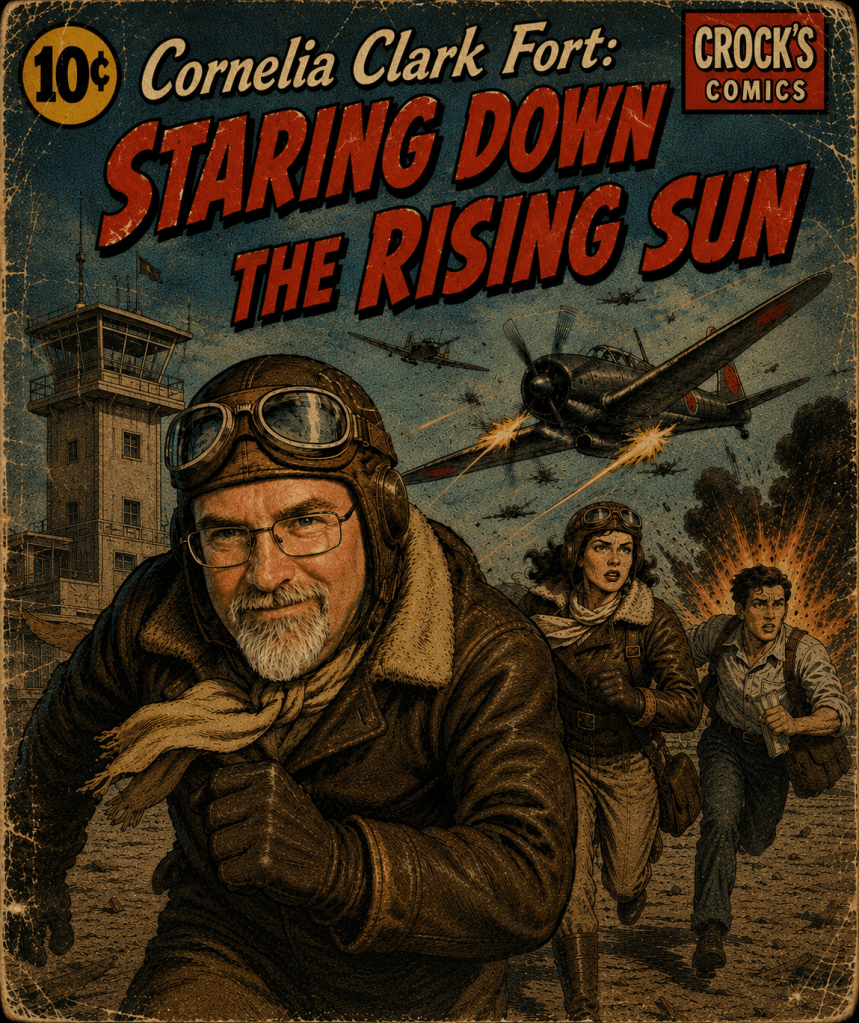
The morning over Honolulu felt too perfect to be real.
The sky stretched wide and unbroken, a pale blue canvas brushed with gold. The air was soft, obedient—no turbulence, no threat—just the quiet hum of the Interstate Cadet’s engine and the steady heartbeat of flight.
Below, the island drifted by in slow elegance, and Pearl Harbor lay still as glass, its ships resting quietly at anchor, silent guardians beneath the Hawaiian sky.
In the cockpit, Cornelia Clark Fort watched everything. Not casually, but with the sharpened awareness of someone who had fought to be here. Every vibration, every whisper of wind across the wings, every flicker of movement below, it all mattered.
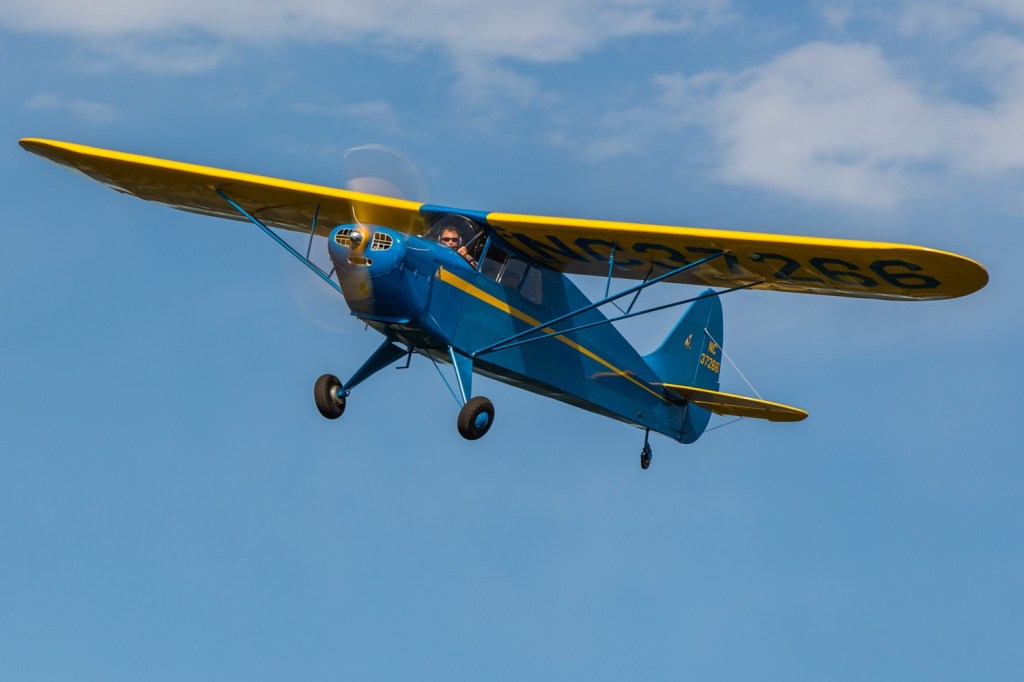
(Wikipedia Commons)
“Ease into it,” she said, her voice calm but firm, guiding her student’s uncertain hands. “You don’t command the sky. You listen to it.”
The aircraft tilted slightly. Corrected, settled… and for a fleeting moment, there was only peace.
Like a shadow of things to come, a shape cut across the horizon. Fast! Too fast!
Cornelia’s eyes locked onto it instantly. Her body stilled, instincts snapping tight like wires under tension. The aircraft possessed a terrifying, unfamiliar profile—sleek, predatory, and devoid of the friendly markings of a U.S. Navy or Army patrol—and it wasn’t climbing or cruising. She paused her thoughts, confused by what she was watching. It was almost as if it were hunting; yet, having never seen anything like it before, she momentarily doubted her instincts because the sight was so entirely out of place.
“Do you see that?” she asked, her tone changing, tightening.
Her student leaned forward. “Yeah… Army?”
But Cornelia’s gaze was already locked. In a sudden, sweeping bank, the intruder exposed its wings to the light, revealing the searing crimson of the Rising Sun. It wasn’t just a marking; it was a declaration of war burned into metal. Her heart plummeted into a hollow void.
“No,” she whispered. “That’s not ours…”
Before she could complete her thoughts, the sky erupted. A roar—violent and tearing—split the air as more planes screamed overhead. Gunfire cracked like ripping canvas. The first explosion bloomed below, a rolling fireball that punched smoke into the heavens. The harbor ignited. Ships tore open under bombardment. Water geysered skyward. Flames spread with terrifying speed, swallowing steel, swallowing men.
Her student gasped, frozen. “What… is happening?!”
“Hands off!” Cornelia snapped, her voice cutting through the chaos like a blade. She seized the controls.
Another aircraft came straight at them—low, fast, deadly. For a split second, she saw everything: the glint of the canopy, the fixed determination of the pilot, the dark snout of the engine pointed like a weapon. And then… gunfire!
The sky stitched itself apart.
She slammed the controls forward. The nose of the aircraft pitched down hard, her stomach lurching as the blue Pacific—vast and merciless—filled the windscreen.
The aircraft rattled violently, wings trembling under the strain. “Hold on!” she shouted.
The air roared around them, alive with fury. The smell of burning fuel seeped upward even at altitude. Black smoke clawed into the sky behind them, thick and suffocating, turning morning into something dark and unrecognizable.
Another explosion, but closer. The shockwave rolled through the air, punching the plane sideways. Her grip tightened—knuckles white, muscles locked—as she fought to keep control. No weapons. No protection. Just instinct, and the thin, fragile mercy of distance.
She pulled back hard. The plane clawed upward, barely clearing rooftops as they skimmed low over the island. Chaos sprawled in every direction. Sirens wailed. People ran. The sky itself seemed alive with violence. Planes diving, climbing, circling like predators in a feeding frenzy.
This was not a battle. This was an ambush! America’s Pacific pearl now tarnished by evil. This was the opening scream of war!
Cornelia’s breathing slowed. Not from calm, but from focus so intense it burned everything else away. Fear had no place here. Not now, only action.
She lined up for landing. The runway rushed toward them—too fast, too uncertain—but there was no choice. The wheels struck hard, bouncing once, twice, before gripping. The aircraft skidded, shuddered… and stopped.
Silence flooded in, sudden and unnatural. Only the distant thunder of destruction remained.
Her student sat frozen, eyes wide, chest heaving. “What… what was that?”
Cornelia didn’t answer right away. She looked back. Smoke towered into the sky in great, boiling columns. Fire consumed the harbor. The peaceful morning was gone… burned away in minutes.
Her voice, when it came, was quiet… certain… “War.”
The Fate of a Pioneer
That morning, December 7, 1941, during the attack on Pearl Harbor, had placed her in the sky at the exact moment history tore itself open. And even after witnessing such violence, she did not turn away from flying… but stepped towards it.
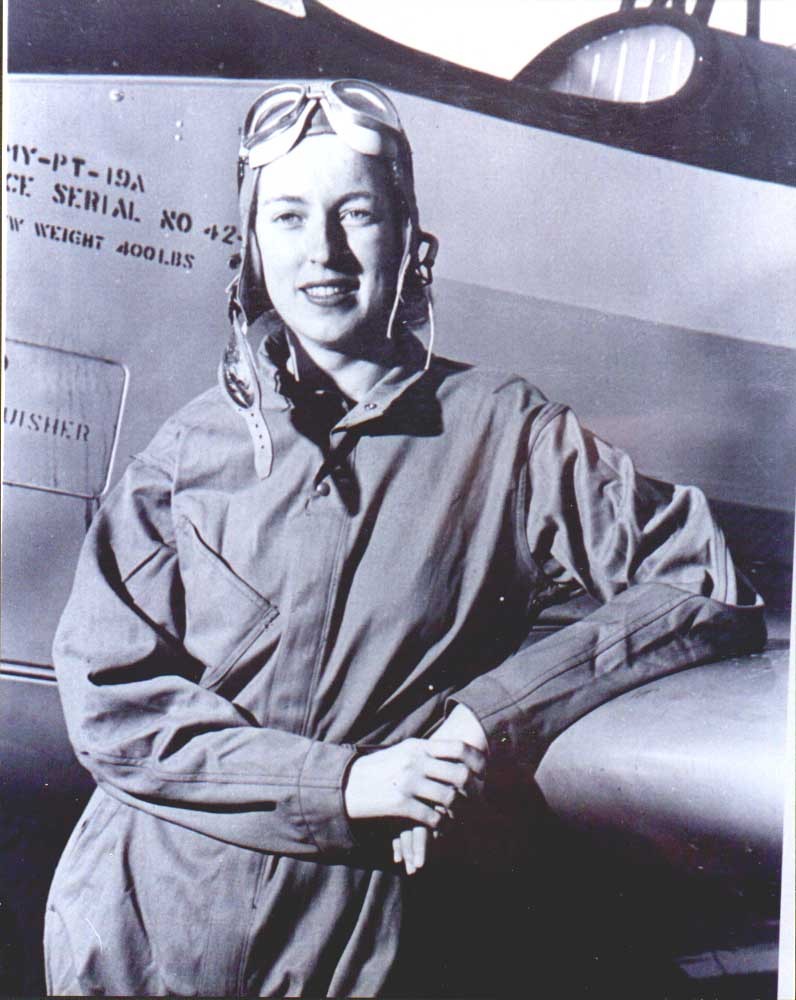
(Wikipedia Commons)
“I dearly loved the airports, little and big. I loved the sky and the airplanes, and yet, best of all I loved the flying. . . I was happiest in the sky at dawn when the quietness of the air was like a caress, when the noon sun beat down, and at dusk when the sky was drenched with the fading light.”
Cornelia Clark Fort
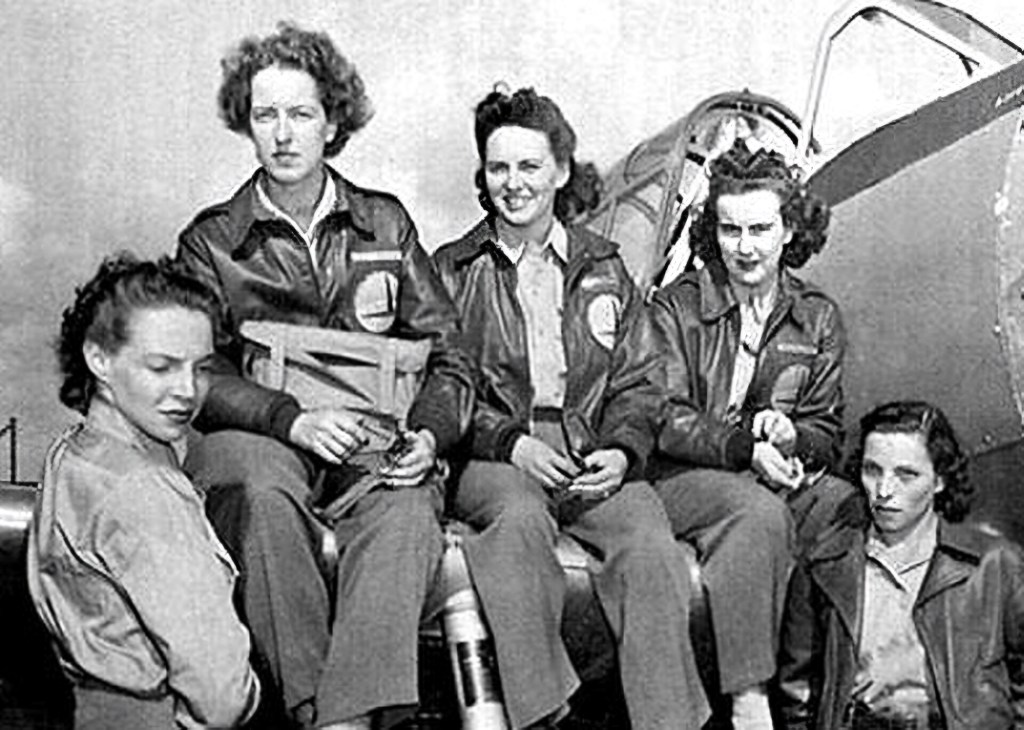
Cornelia would go on to join the Women Airforce Service Pilots (WASP), ferrying military aircraft across the country—flying the machines of war so others could carry the fight overseas. She flew not for recognition, but because the sky was where she belonged… even when it had proven how deadly it could be.
But the sky is not sentimental. It does not remember who loves it.
On March 21, 1943, near Merkel, Texas, in a routine mission that should have been just another flight, her aircraft collided with another in mid-air. No warning. No escape.
She was the first female pilot in American history to die while on active duty. She was only 24 years old.
Cornelia Clark Fort had once stared down war in the sky… and lived. In the end, it was the same sky that took her, leaving behind a lasting legacy as a true pioneer of aviation history. Though time has passed and most have forgotten her name, she boldly broke barriers and paved the way for generations of future female aviators to take flight.


