Seventy-two years ago today, in 1958, the McDonnell Douglas F-4 Phantom II took to the skies for the very first time. And yes, I do celebrate airplane birthdays. So don’t judge! 😜
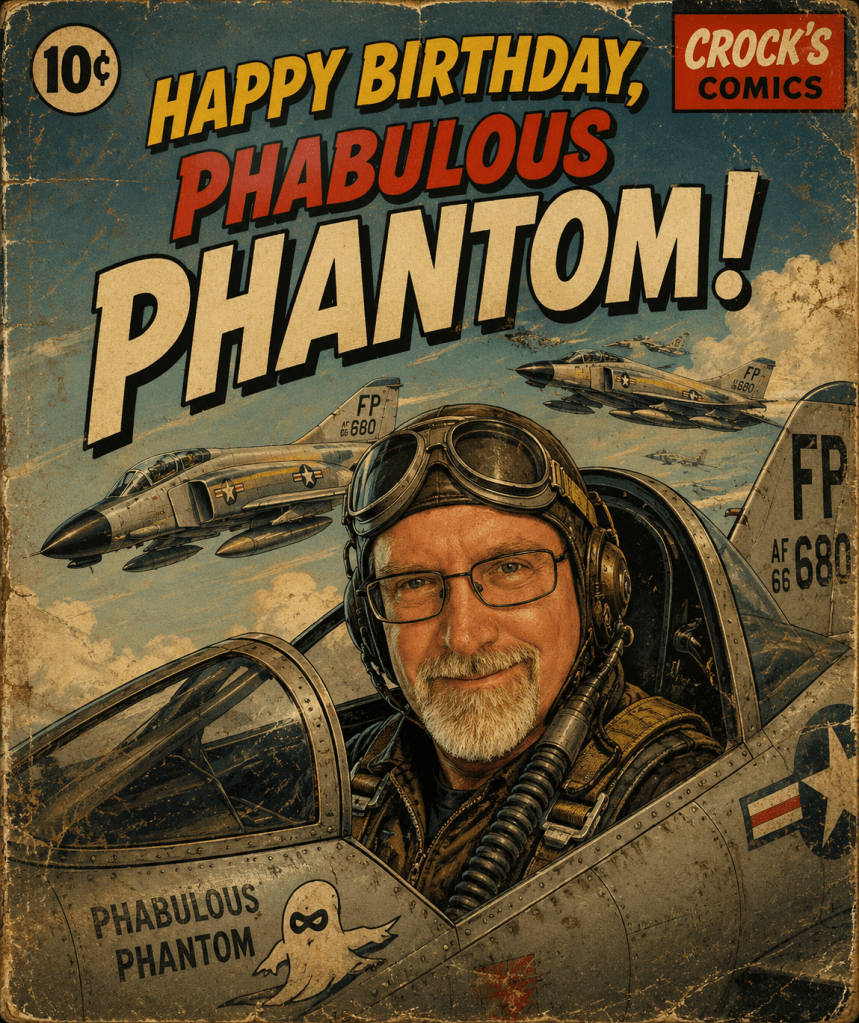
Now, if you’re a fan of sleek, aerodynamic masterpieces that look like they were carved by the wind itself… well… ummm… you’re probably looking at the wrong airplane. The F-4’s design proves that if you strap two massive General Electric J79 engines to something—you know… pretty much everything—you can even make a brick break the sound barrier! Just saying … 🤷😂
On May 27, 1958, Robert C. Little throttled up the XF4H-1—prototype designation for the F-4—at Lambert Field in St. Louis, Missouri. It was an awesome as a possum moment that lasted exactly 22 minutes, though it wasn’t without its quirks.
By the way, possums are pretty awesome! Just saying… Anyway, back to the Phantom’s story…
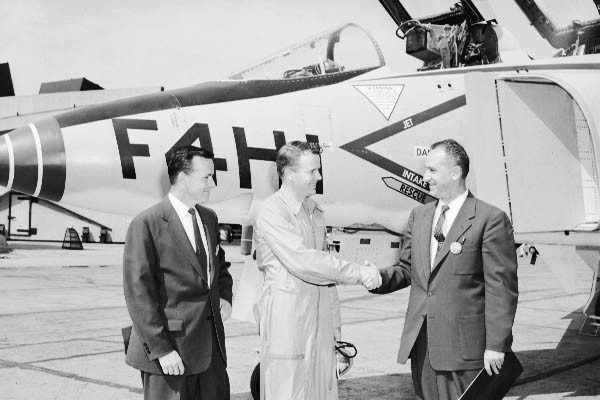
In true first flight fashion, a hydraulic issue decided to reveal itself early on. This tiny gremlin would not allow Little to retract the landing gear, which meant the gear remained firmly locked in the down position for the duration of the flight. Let’s just say, there was no supersonic flying on this day. But it didn’t matter. Even with the training wheels out, the Navy knew they had a winner.
From Navy Interceptor to Multirole Legend
Originally designed as a U.S. Navy fleet defense interceptor, the Phantom quickly developed the aviation equivalent of career ambition. It didn’t stop at interception… but expanded its résumé.
By 1961, it entered service with the Navy, and soon after, the Marine Corps and Air Force all said, “Yeah, we’ll take one of those, too! Or… you know, maybe several hundred!”
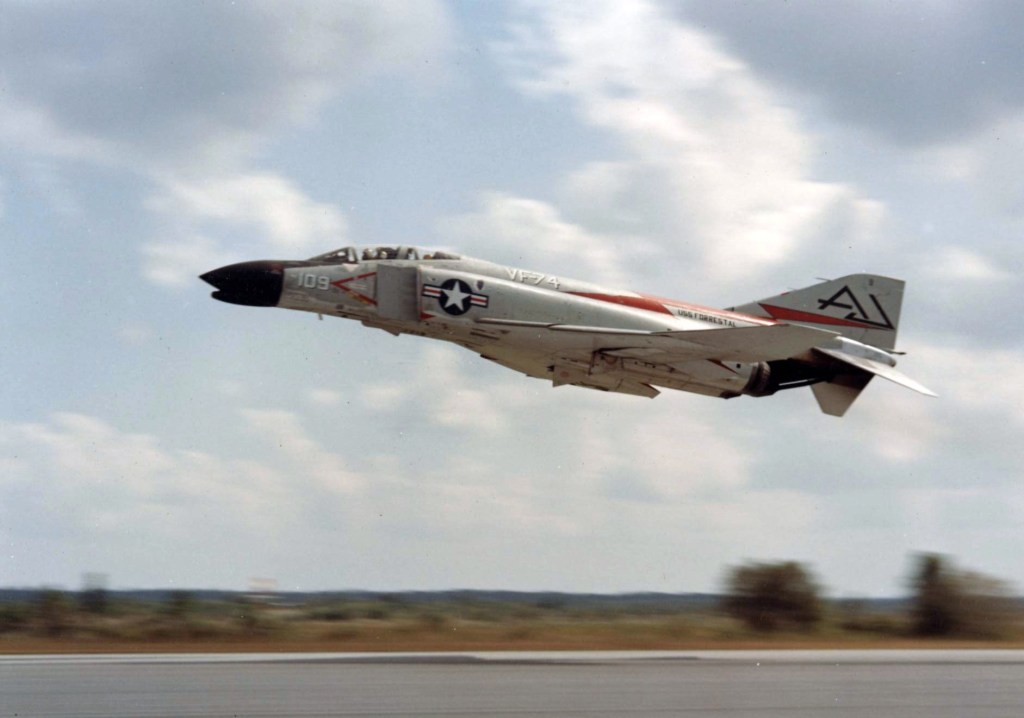
It would go on to be an air superiority fighter for all three branches and would later be used for ground attack and aerial reconnaissance, too! It became one of the defining jets of the Vietnam War era, where it built a reputation for toughness and speed!
The “Double Ugly” Charm
To its pilots, the McDonnell Douglas F-4 Phantom II was “Old Smokey” or “Rhino.” To the rest of us, it was a masterclass in brute-force engineering wrapped in enough noise and smoke to terrify even the toughest enemies.
The name “Old Smokey” came from the Phantom’s engines, which had a habit of belching thick black smoke across the sky like the airplane was running on diesel fuel and barbecue charcoal. If stealth had existed in the 1960s, the F-4 would’ve proudly flown in the opposite direction trailing a giant “HERE I AM” banner.
And as far as “Rhino”… well, it fit because the Phantom wasn’t sleek or elegant like later fighters. It was big, loud, fast, and built like it could accidentally fly through a brick wall and apologize afterward. Pilots loved it because it had the aerodynamic grace of a charging rhinoceros… yet somehow could still outrun almost everything in the sky.
Legacy
While it’s mostly retired from front-line service today, the F-4 remains the benchmark for the heavy metal era of aviation. It’s the aircraft that proved you don’t need to be pretty to be a superstar. You just need enough horsepower to make your enemies regret being in your way.
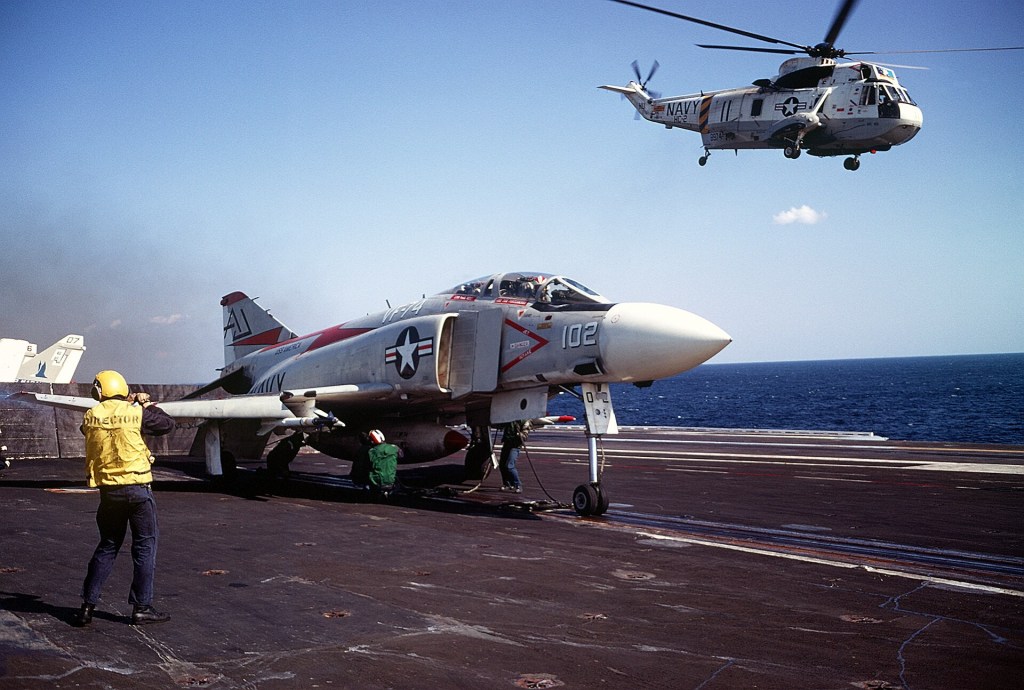
So, here’s to the F-4 Phantom II. 🍻 Happy Birthday, you magnificent, smoky, record-breaking beast! Seventy two never looked so… well, kinda loud! Lol!
 Crock’s Thoughts


_1972-73.JPEG#mw-jump-to-license)