Sooo… you pull up a weather chart, feeling very professional aviator like, very in-the-know, and then you see it. Yeah, that chaotic mess of lines and feathers that kinda looks like a porcupine fell into a blender.
Yep, I’m talking about wind barbs! I know… you’re probably thinkin’, “Wind, what?” Sounds less like meteorology and more like something you pull out of your sock after a long hike on a windy day.
And sure, you might be thinkin’ I’m a little crazy over here writing about wind barbs… but just you wait until I sell the movie rights. 😜 Then we’ll see who’s nutty! I’ll be walking the red carpet explaining isobars while you’re asking for my autograph.
Now you’re probably wondering what the hell is an isobar?! Well, that’s a tale for another time.
So, anyway… why do I want to write about this meteorological chicken scratch? Because wind barbs are all about… well… wind. Shocking, I know! Next week I’ll reveal that rain gauges measure rain.
And since wind has a teeny tiny impact on airplanes—like determining whether you land gracefully or arrive looking like you wrestled the runway—they’re kinda important.
What the Heck is a Wind Barb?
A wind barb is basically a little stick figure with a bad hair day that lives on the Surface Analysis Chart. It’s a symbol that tells you two things about the wind:
- Direction – Where the wind is coming from, not where it’s going.
- Speed – How fast your hat will be blown off your head.
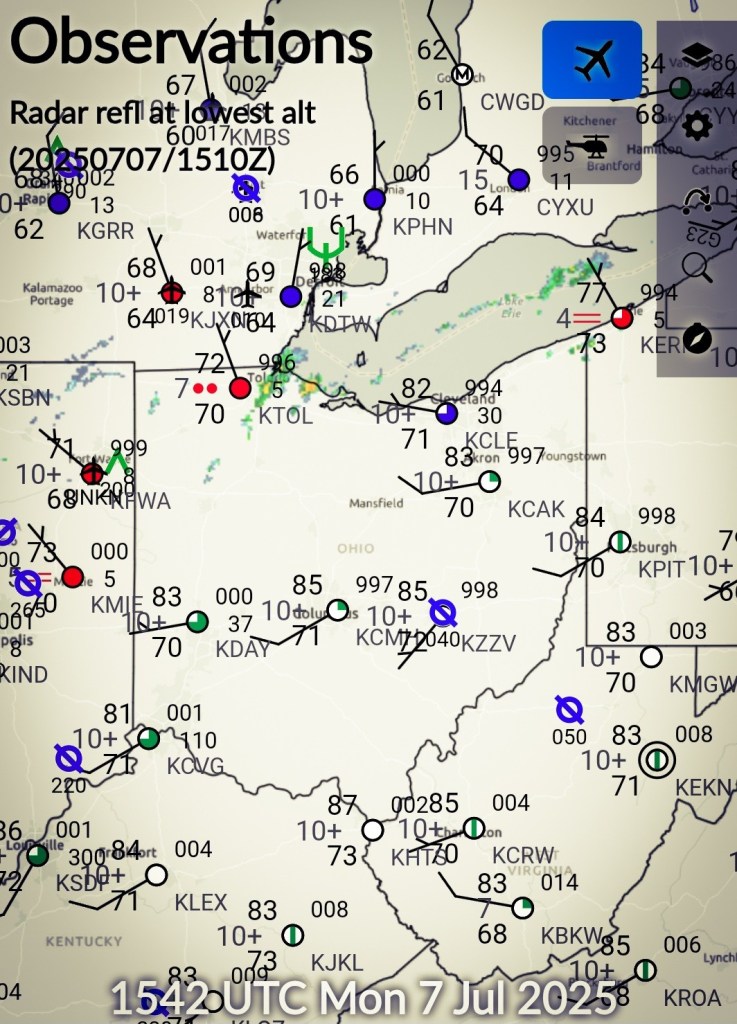
Breaking Down the Porcupine
- Stick = Wind direction
- Feathers (barbs) = Wind speed
- Triangle (flag) = 50 kts. Meaning, I should probably secure the patio furniture.
- Long barb = 10 kts. Meaning, not bad, let’s fly a kite.
- Short barb = 5 kts. A gentle breeze, perfect for being overly dramatic about how windy it is.
- Circle around another circle: Calm. No hairspray required.
Here’s a key for those little stick figures…
Important Reminder
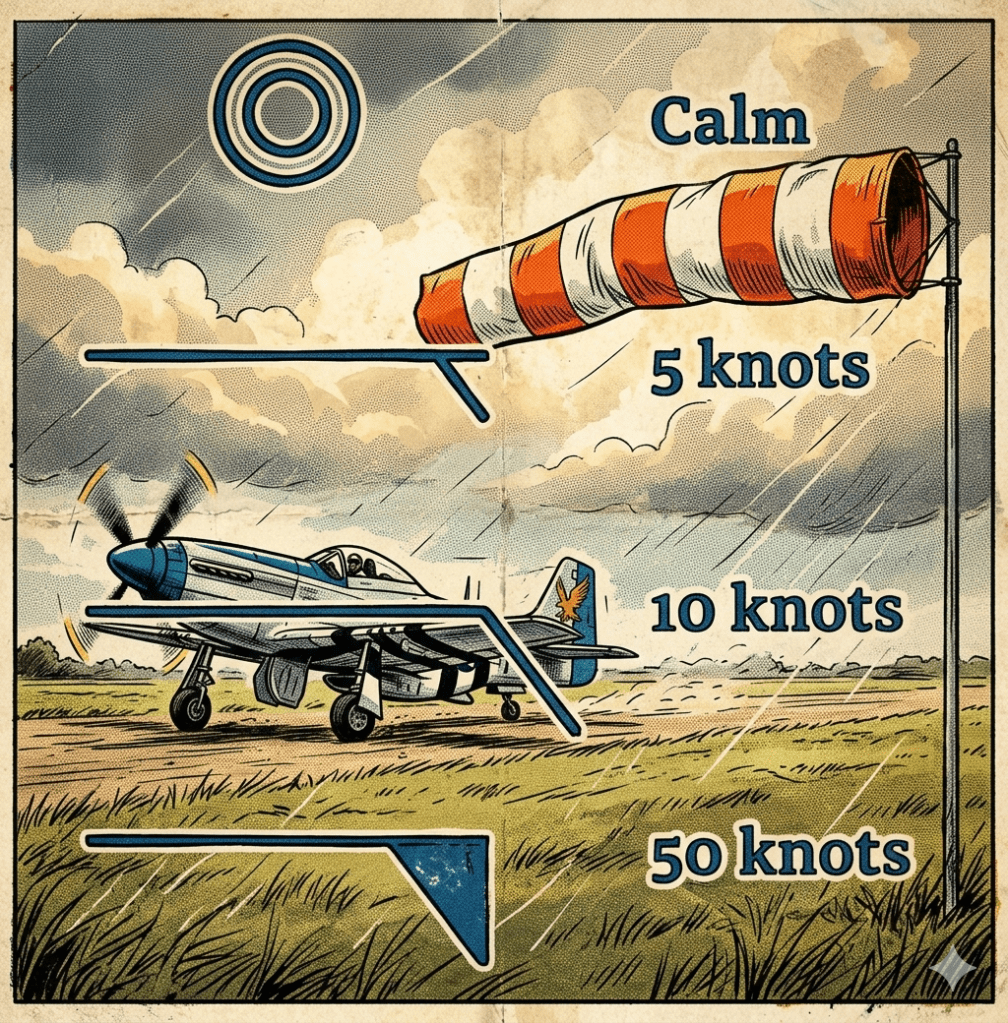
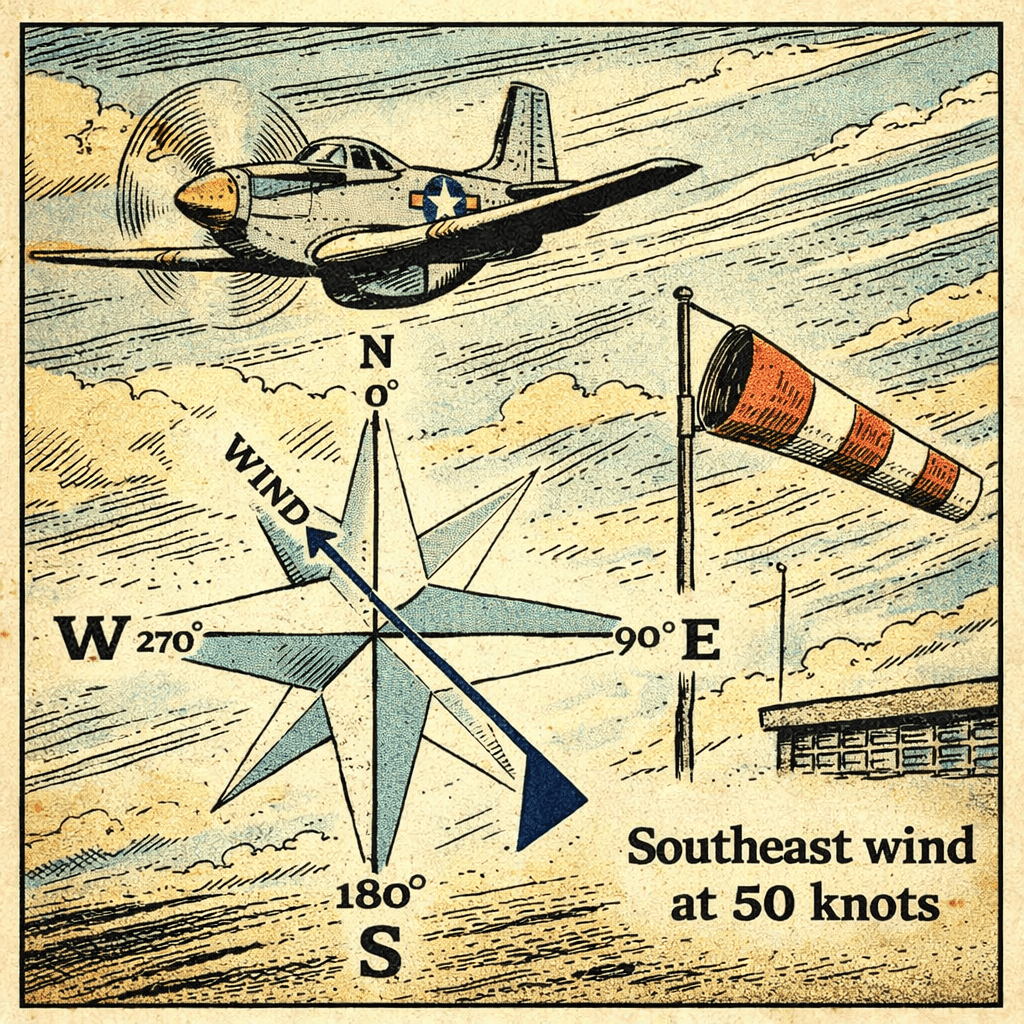
Wind barbs point into the wind. They are not arrows showing where you’ll be blown to like a confused tumbleweed. They point where the wind is coming from.
If the stick is pointing southeast (like the example below), the wind is coming FROM the southeast. NOT going southeast. I repeat, NOT going southeast.
How to Actually Read these Stick Figures
- Locate the stick.
- See which direction it’s pointing. That’s where the wind is coming from.
- Count the feathers (barbs). The more feathers = more fun on final approach. 🌬️🛩️
- Add ’em up!
- So, if you see a stick with one long line (10 kts) + one short line (5 kts) = 15 kts
- One triangle (50 kts) + two long lines (20 kts) = 70 kts. Meaning, kiss your hat goodbye! And maybe your roof shingles, too!
- Pretend you knew all this already. Confidence is key!
Final Crock’s Thoughts
Wind barbs may look intimidating, but once you realize they’re just fancy stick figures telling you which direction you’re about to be pummeled from and how hard, life becomes a lot easier.
Plus, now when you glance at a weather chart, you can throw around terms like “knot” and “barb” and “triangular gale of doom” and sound like you’re a veteran aviator.
Happy forecasting!
 Crock’s Thoughts