The roar of the four Pratt & Whitney engines was a deafening, metallic scream that clawed through the cockpit of the C-54 Skymaster. A relentless vibration that served as a constant reminder of the thin line between life and starvation for those below. Through the cockpit windows, the skeleton of West Berlin slipped by, a jagged wasteland of scorched brick and hollowed-out cathedrals that looked more like a graveyard than a city. Under the suffocating weight of the Soviet blockade, two million souls were being methodically starved into submission, their only hope suspended in the air.
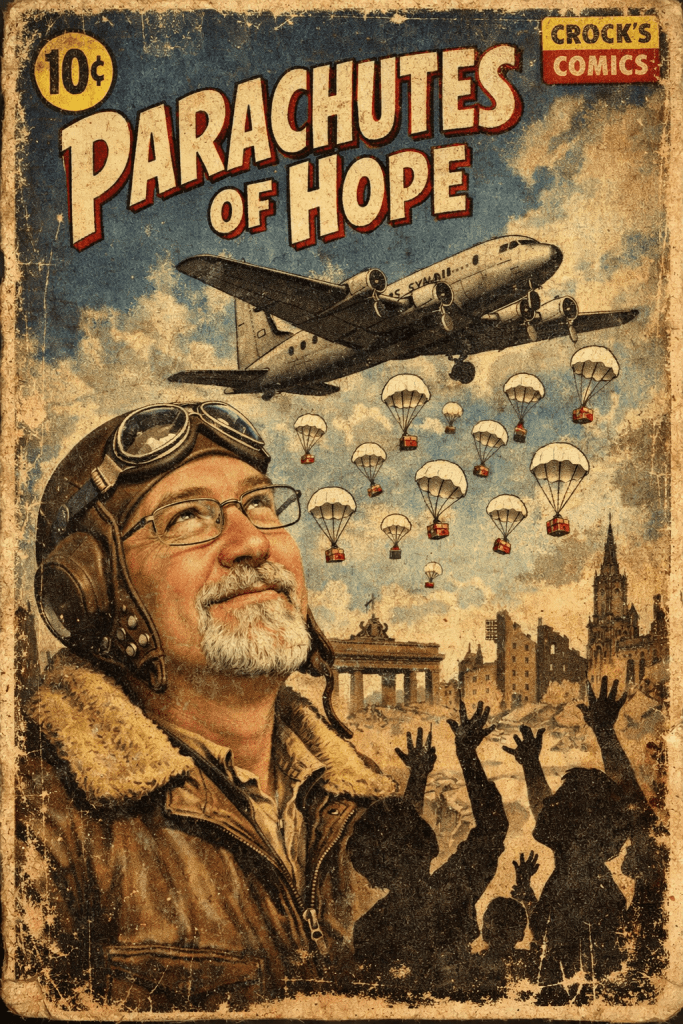
Lieutenant Gail “Hal” Halvorsen gripped the yoke, his eyes scanning the horizon not for enemy fighters, but for a familiar stretch of barbed wire near the Tempelhof runway. He wasn’t just transporting the heavy load of supplies today; he was carrying a promise…
He checked his altitude, the needles on the instrument panel vibrating against the tension of the flight. To the Soviet observers watching from the eastern sector, this was just another run for Operation Vittles—the official U.S. designation for the Berlin Airlift—part of the 2.3 million tons of coal and flour keeping the city from freezing in the dark. But as the airfield loomed closer, Hal turned to his crew with a conspiratorial nod. They reached for the small, white bundles, preparing to push them out into the rushing wind.
The secret pact had been forged days earlier at that very fence. Hal had approached a group of thirty children, expecting the desperate begging he’d seen across Europe. Instead, they spoke to him in hushed, polite tones about freedom and the blockade. Deeply moved, he reached into his pocket and found only two sticks of gum. He watched in awe as the children tore the gum into tiny pieces to share, while those who got none simply sniffed the wrappers.
“Come back tomorrow,” he had whispered through the wire. “I’ll drop enough for everyone.”
When they asked how they would find him among the dozens of identical planes, he gave them the signal that would become legend: “I’ll wiggle my wings.”
With a firm hand, Hal began to rock the massive transport plane. The wings dipped heavily to the left, then surged to the right, a silver giant dancing in the gloomy German sky.
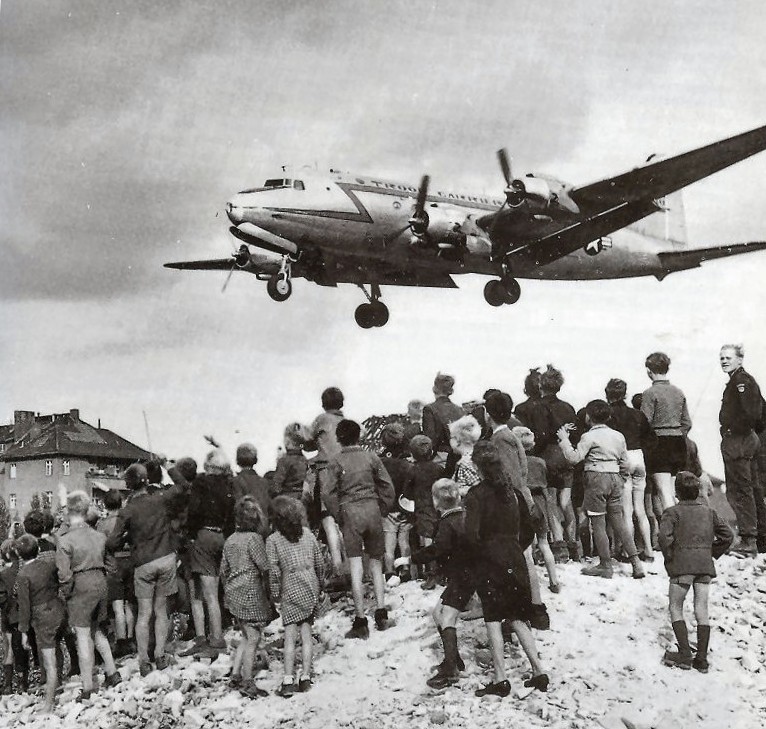
Below, the gray landscape suddenly broke into color. A sea of small, upturned faces erupted in motion near the perimeter fence. These were the children of the ruins, kids who had learned to identify the hum of a C-54 before they could solve long division. They had been waiting for the signal. When they saw the wings dip, a roar went up from the ground that rivaled the engines above.
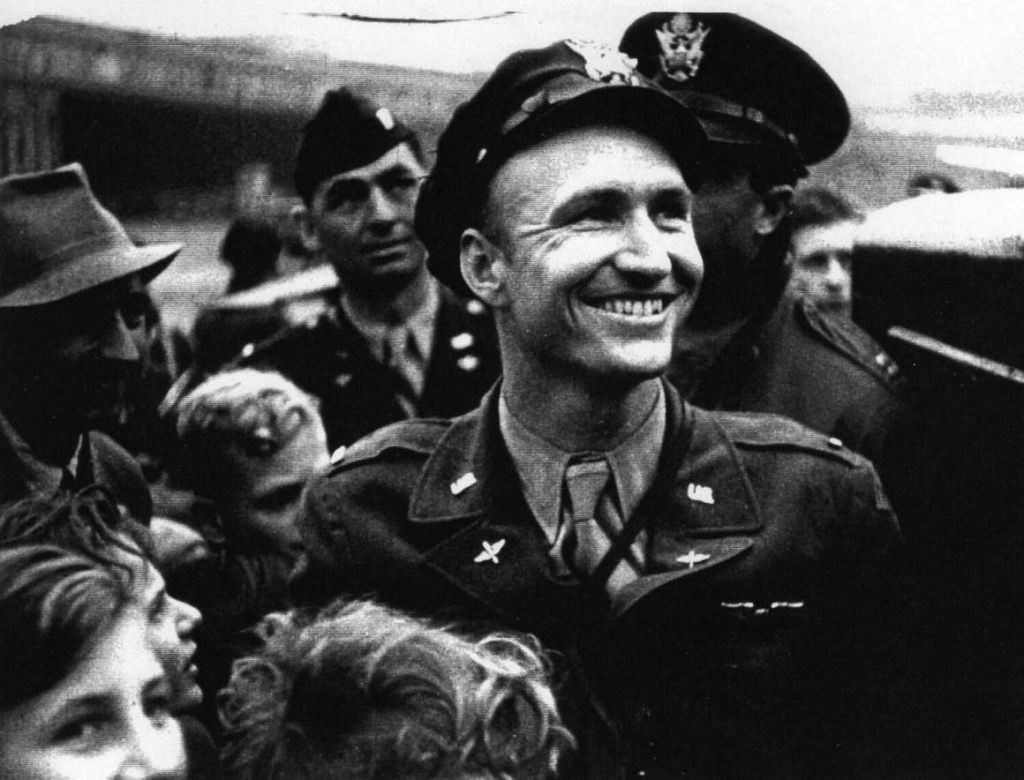
The parachutes—nothing but handkerchiefs weighted down with sticks of Wrigley’s gum and chocolate bars—blossomed like white flowers against the backdrop of industrial smoke. To the children, Hal was no longer a soldier of a former enemy; he was “Uncle Wiggly Wings,” “The Candy Bomber,” and “The Chocolate Flyer.” As the sweets drifted into their outstretched hands, the sugar did what the blockade couldn’t: it broke the bitterness of the war.
Over the next year, that single gesture ignited a movement known as “Operation Little Vittles.” Other pilots joined the cause, and eventually, 23 tons of candy fell from the heavens, proving that while armies occupy land, it is kindness that captures the heart.
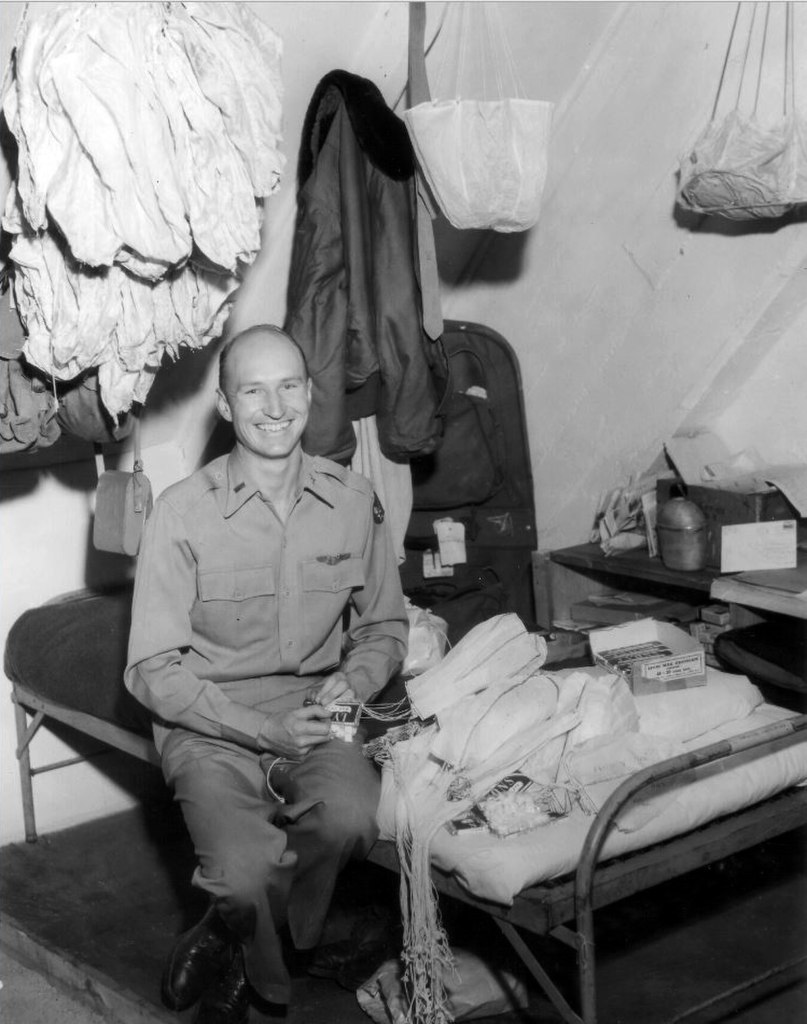
On this day in history, February 16, 2022, when Colonel Halvorsen passed away at 101, he left behind a world that still remembered his signal. In a world reeling from war, a few sticks of gum and a parachute made of kindness helped build bridges far stronger than politics ever could. His wings wiggled one last time, and as the old saying goes for those who have lived their lives in the sky, he finally went west—embarking on a final flight into the golden hues of the sunset, followed by a century of gratitude.
 Crock’s Thoughts

