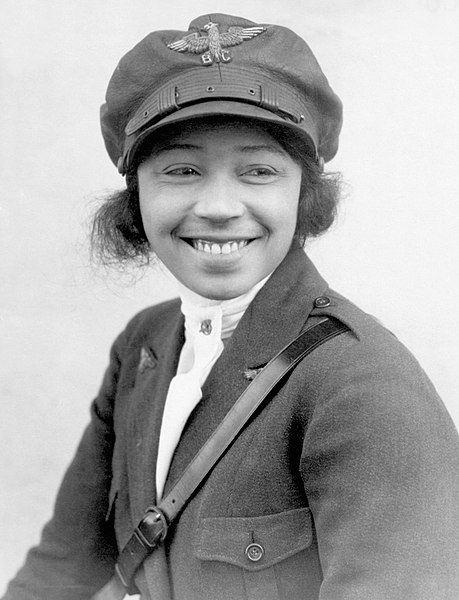
On June 15, 1921, Bessie Coleman shattered the skies—and history—by becoming the first woman of African American and Native American descent to earn an international pilot’s license. And not just any old license: this one came from the prestigious Fédération Aéronautique Internationale in France. That’s right—while America was still busy segregating train cars and voting booths, Bessie earned her wings… in French.
Born in 1892 in Atlanta, Texas—not the Georgia one—Bessie Coleman came into a world where the deck was stacked, the cards were marked, and the dealer was definitely not rooting for her. Segregation and discrimination weren’t just present—they were baked into the system like overcooked bread. But when she heard stories of brave pilots returning from the skies of World War I, a spark caught fire inside her: she would fly!
There was just one small problem: no flight school in America would accept a Black woman. Or a Native American woman. Or any woman who wasn’t white and male, for that matter. Her polite response?
“I refused to take no for an answer.”
Translation: Bessie wasn’t here to ask nicely.
So, she did what any determined, fearless, aviation-obsessed woman would do: she learned French, crossed the Atlantic, and dared the world to stop her.
France, it turned out, was a little more enlightened-or at least less backward—when it came to race and gender. There, African American soldiers like the Harlem Hellfighters had been treated with more respect than they ever got back home. Bessie arrived in Paris in November 1920 and enrolled in the Caudron Brothers’ School of Aviation. Her training? Conducted in a Nieuport 82 biplane, a machine as temperamental and twitchy as a cat on espresso. But Bessie mastered it with grit and grace.
By June 15, 1921, she had earned her license—and suddenly, Queen Bess had entered the chat.
Returning to the U.S., she was hailed in the press as a sensation. But headlines don’t pay for airplanes, and applause doesn’t open hangar doors. Despite the fame, opportunities were few. Undeterred, she returned to Europe in 1922, training with none other than Anthony freakin’ Fokker—yes, the same guy whose planes had been dogfighting across WWI skies. If you’re going to learn, learn from a legend.

Armed with serious skills and even more determination, Bessie hit the barnstorming circuit—aka the flying circus of the Roaring Twenties. She soared, looped, and flipped her Jenny biplane through the heavens with style and swagger. Crowds gasped. Jaws dropped. “Queen Bess” ruled the skies!
But for Bessie, flying wasn’t just about the thrills. It was about the mission.
“I decided blacks should not have to experience the difficulties I had faced, so I decided to open a flying school and teach other black women to fly.”
That dream, however, ended too soon.
On April 30, 1926, during a test flight in Jacksonville, Florida, her plane went into an unexpected dive due to mechanical failure. Bessie, not wearing a seatbelt while scouting for stunts, was thrown from the cockpit. She died at just 34. But what she started? That didn’t die, but took off!
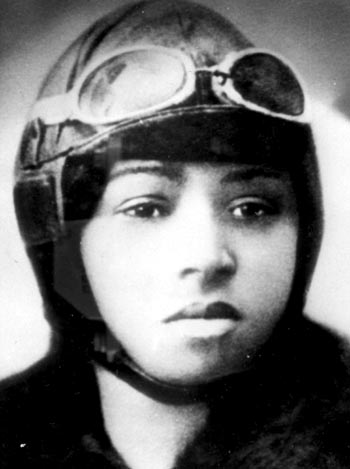
A woman of faith, courage, and relentless vision, Bessie Coleman didn’t just break barriers—she flew right over them. Her spirit soared into the hearts of future aviators, including the Tuskegee Airmen. Lieutenant William J. Powell, another early Black aviation pioneer, wrote of her legacy:
“We have overcome that which was worse than racial barriers. We have overcome the barriers within ourselves and dared to dream.”
Today, Bessie Coleman is etched into the heavens she once conquered. Because when Queen Bess looked up, she didn’t just see the sky—she saw freedom.
“The air is the only place free from prejudices.” — Bessie Coleman
 Crock’s Thoughts


