This day in history, June 4, 1942, America’s back was against the wall. Just six months after the devastation of Pearl Harbor, the battered U.S. Navy faced a formidable enemy once more. Three lone U.S. aircraft carriers stood as the last defense between the Imperial Japanese Navy and the West Coast of the United States. The stage was set for what would become one of the most pivotal naval battles in history—the Battle of Midway!
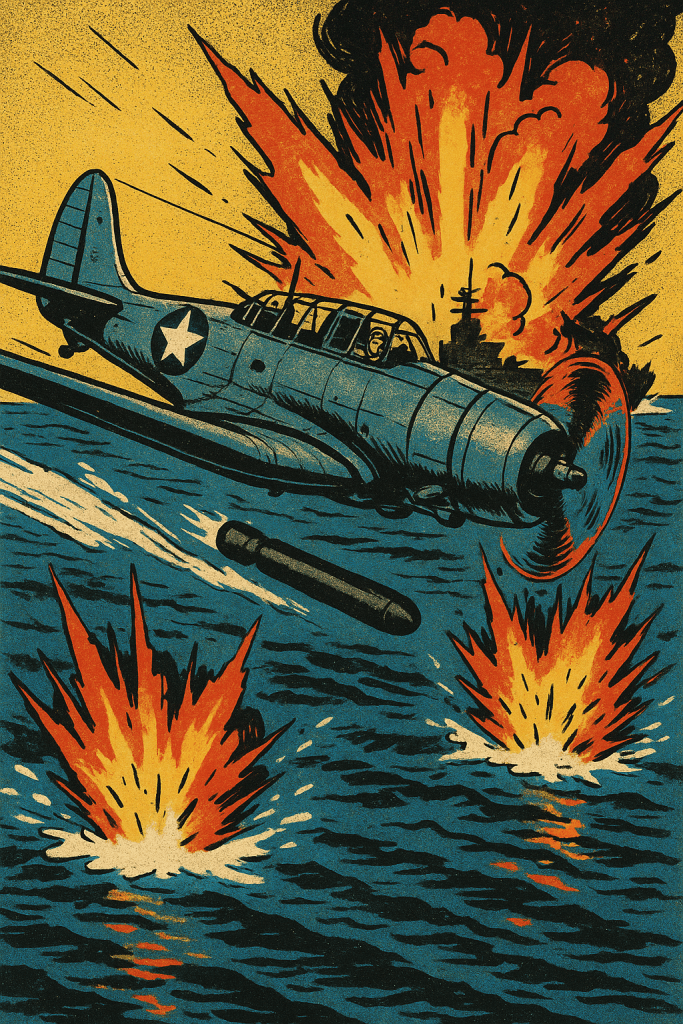
When I was a kid, the second book I ever read was The Battle of Midway. The heroism of those pilots and sailors lit a fire in me—one of the many inspirations that steered me toward aviation. I love their stories!
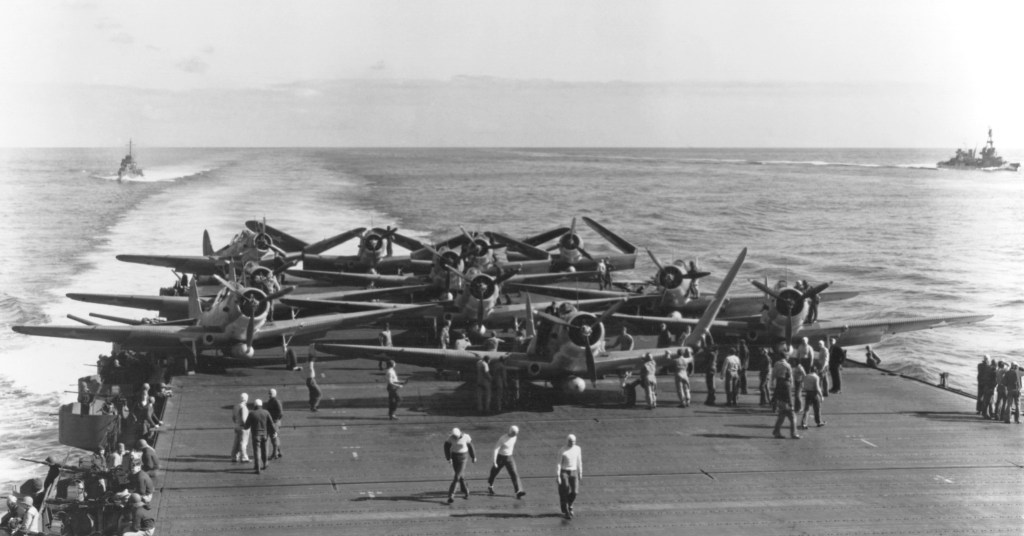
On the first day of battle, fifteen U.S. Douglas TBD-1 Devastators from Torpedo Squadron 8 (VT-8) launched from the decks of the USS Hornet. Under the command of Lt. Cmdr. John C. Waldron, they set out to find the Japanese fleet… and they did!
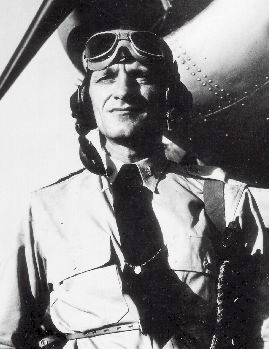
Lt. Cmdr. Waldron had an uncanny instinct for navigation. As the lone survivor, Lt. George Gay, would later recall:
“He told us when he left not to worry about navigation, but to follow him—he knew where he was going. And it turned out just exactly that way. He went as straight to the Jap fleet as if he’d had a string tied to them…”
But courage alone couldn’t overcome the odds they faced. As VT-8 began its torpedo run, roughly 35 Japanese Zeros descended upon them. Flying outdated, slow torpedo bombers with no fighter cover, they were sitting ducks.
Not a single plane from Torpedo Squadron 8 would return to the deck of the Hornet. Twenty-nine brave airmen were lost in minutes. Only Lt. George Gay survived, shot down and left floating in the vast Pacific—forced to witness the battle unfold from the water, mere yards from the enemy fleet.
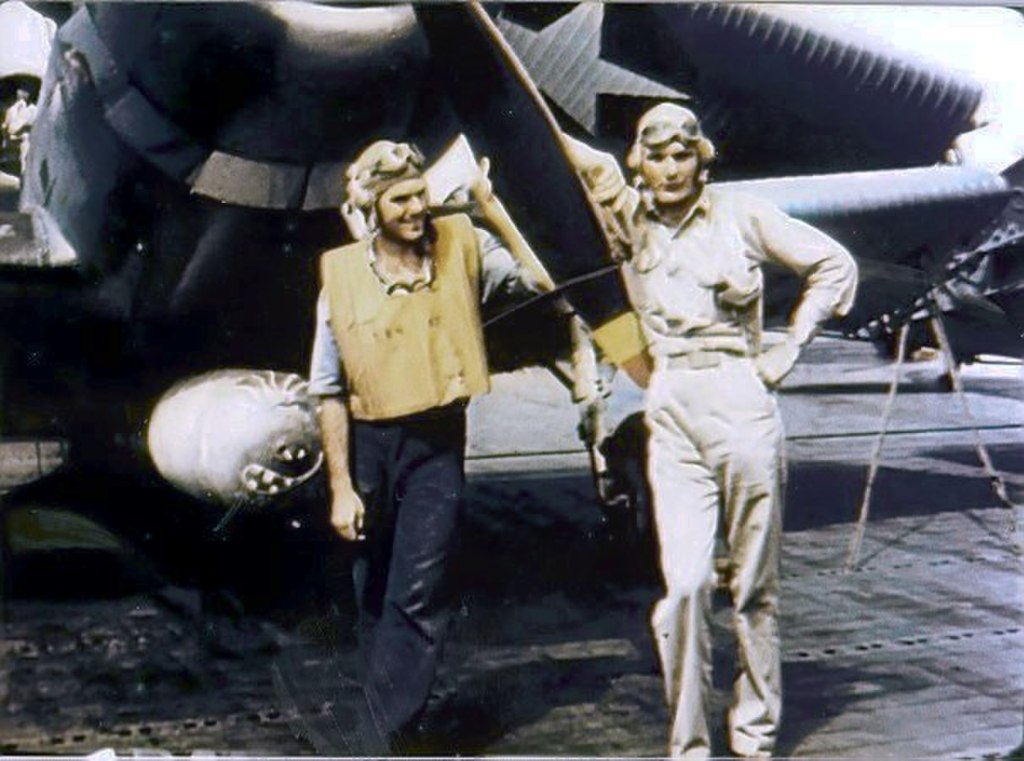
Years later, Lt. Gay set the record straight about what happened that day:
“It’s been a general opinion that anti-aircraft fire shot our boys down—that’s not true. I don’t think any of our planes were touched by anti-aircraft fire. The Zeros shot down every one of them. By the time we reached the flak, the fighters had already done their work. I was the only one close enough to face real anti-aircraft fire—and I don’t think it even touched me.”
Lt. Gay managed to release his torpedo, but survival was fleeting.
“Before I got away, five Zeros dived on me in a line. The second or third one shot out my rudder and ailerons. I pancaked into the ocean. The hood slammed shut… I couldn’t keep the right wing up—it hit the water first, snapped the plane, bent it all up. I couldn’t hardly get the canopy open. That’s when I got scared. I thought I’d drown in the plane.”
By sheer will and luck, he escaped the wreckage and lived to tell the tale.
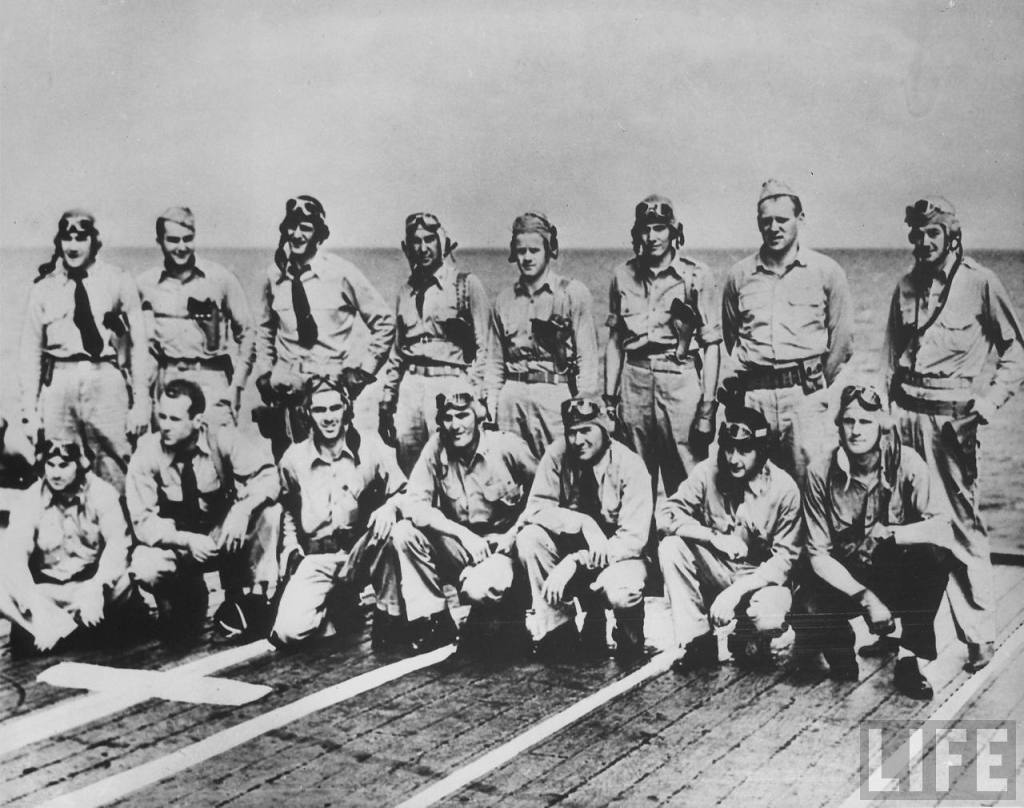
Yet, despite his survival, Lt. Gay always deflected praise. His words remain a testament to true heroism:
“Personally, I was just lucky. I’ve never understood why I was the only one that came back. But I want to be sure—the men that didn’t return get the credit for the work they did.”
Torpedo Squadron 8’s sacrifice wasn’t in vain. Their courage distracted the Japanese defenses long enough to open the door for U.S. dive bombers to strike a decisive blow—turning the tide of the Pacific War.
Today, we remember their bravery. Against impossible odds, they flew anyway!
 Crock’s Thoughts