
Aviation is full of strange codes and abbreviations. METARs—those snazzy weather reports pilots pretend to understand—are chock-full of them. There’s BR for mist, TS for thunderstorms (terrifying stuff), and my personal favorite: FU for smoke.
Yes, you read that right: FU! 🤬😂
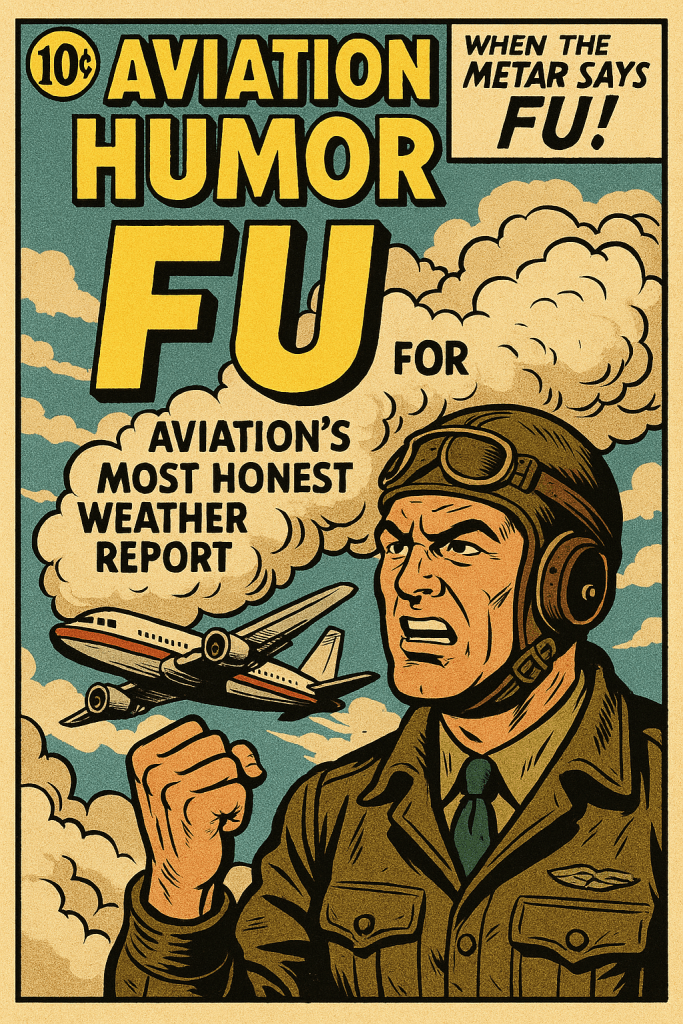
Now before you think the weather station is just having a bad day and sending pilots passive-aggressive messages, let’s get classy. FU actually stands for Fumée, the French word for smoke. That’s right—the noble French language gave us the most emotionally accurate abbreviation in aviation history.
Imagine it: you’re flying a nice little cross-country trip, everything’s smooth, the ATIS sounds normal—until you catch the METAR:
KXYZ 301755Z 12005KT 3SM FU SCT020 28/18 A3005
Three miles visibility in FU? Say, what? 🤔
Nothing else better captures that moment when you realize: I have to land in this? FU indeed!
Smoke is no joke. It drops visibility to miserable levels, chokes your engine, and makes your passengers squint out the windows like confused meerkats. It’s Mother Nature’s way of saying, Good luck, pal!
But let’s be honest—deep down, pilots love it. We get to throw around serious-sounding pilot lingo like:
“Yeah, I had to shoot an approach to minimums through heavy FU.”
Instant street cred. Instant aviator gravitas. Instant excuse for why you parked the plane two feet off the centerline.
And because aviation can’t resist turning everything into an acronym, it’s almost poetic that the weather itself sometimes just tells you how it feels: FU!
So next time you’re checking the METAR and see FU pop up, don’t get mad. Just smile, salute the French for their contribution to meteorological sass, and remember: no one said flying was going to be smoke-free.
Oh, and if your passengers ask what FU stands for, just tell them it’s “Fairly Unpleasant.” It sounds professional and technically accurate. Just saying… 🤷
 Crock’s Thoughts